Interior plastering
Plastering robot applications for residential and public buildings, based on substrate, wall condition, area and materials.
Discuss plastering ↗ 简体中文
 English
 繁體中文
 日本語
 한국어
 Français
 Deutsch
 Español
 Português
 Русский
 Italiano
 Nederlands
 العربية
 ไทย
 Tiếng Việt
 Bahasa Indonesia
 Bahasa Melayu
 हिन्दी
 Türkçe
 Polski
 Українська
 Svenska
 Dansk
 Norsk
 Suomi
 Čeština
 Magyar
 Română
 Ελληνικά
 עברית
 فارسی
 Filipino
 বাংলা
 اردو
 Српски
 Hrvatski
 Slovenčina
 Slovenščina
 Lietuvių
 Latviešu
 Eesti
Rental and construction cooperation for projects worldwide. We align equipment configuration and on-site execution with your site conditions, tasks and schedule.
Share your project details and we will review site conditions, programme and quantities before proposing rental or cooperation options.
Plastering robot applications for residential and public buildings, based on substrate, wall condition, area and materials.
Discuss plastering ↗Putty and emulsion spraying for interior walls and ceilings, assessed against site organisation and conditions.
Discuss spraying ↗Setting-out and modelling tasks, with scope, site data and equipment compatibility reviewed together.
Discuss modelling ↗Rebar processing and prefabrication configured around quantities, process type, yard space and material supply.
Discuss rebar works ↗Codes, logistics, site organisation and service conditions differ across countries and projects. We start with your project information, then discuss equipment and cooperation feasibility.
The more complete your project information, the faster we can assess equipment fit and site requirements.
Country, scope of work, quantities and planned timing.
Work faces, materials, access and site organisation.
Configuration and rental / construction cooperation.
Scope, transport, crew, cost and schedule by agreement.
Case studies should present verified tasks, equipment models, site conditions and measured results.
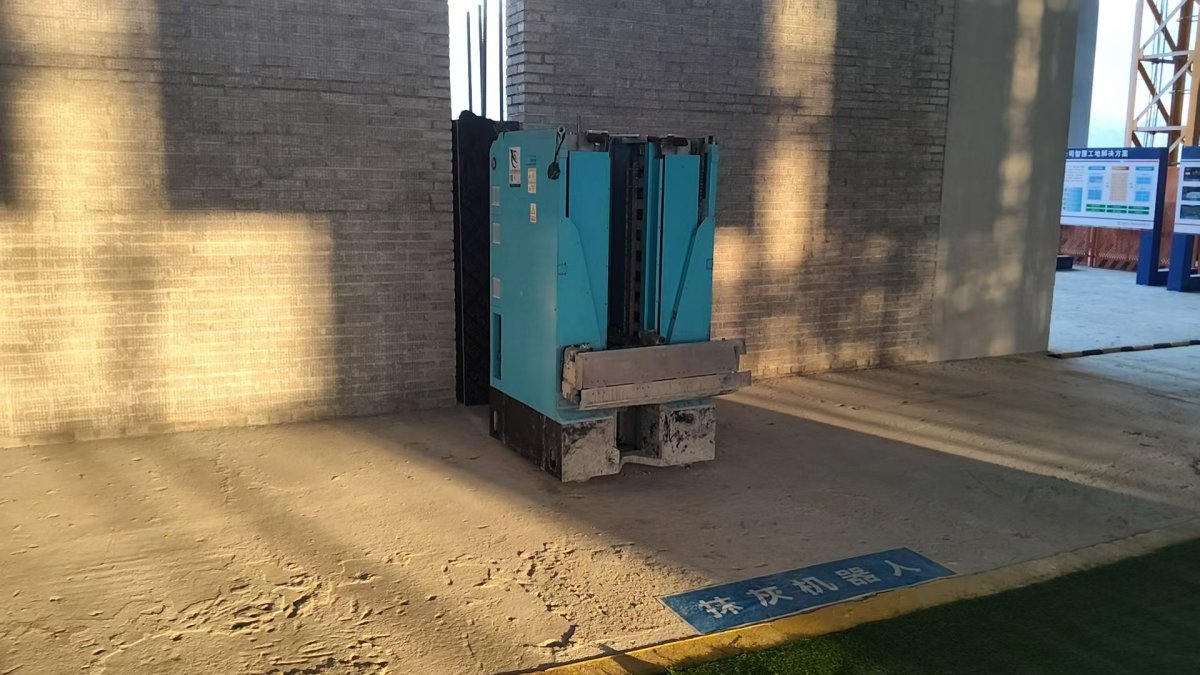
As a key regional transportation hub project, Wenzhou South Railway Station features a massive scale, high standards, and a tight construction schedule. In the past, wall plastering relied on manual labor, with workers carrying mortar, applying it to the walls, and leveling it. After a day's work, they would suffer from back and arm aches, and the quality was subject to their manual feel.
This time, Ronghao Intelligent Construction brought plastering robots to the construction site: automatic material feeding, automatic leveling, controllable thickness, and a uniform wall appearance. In the construction of large-area standard walls, the efficiency is significantly higher than traditional manual labor, the risk of hollow spots and cracking is reduced, and there is less rework required later.
"Robots do the repetitive work, while workers do the detailed work and quality control," said a project team from China Railway 22nd Bureau. Plastering robots are not meant to replace people, but to free experienced workers from heavy physical labor, making human-machine collaboration more stable and professional.
Scan to follow